
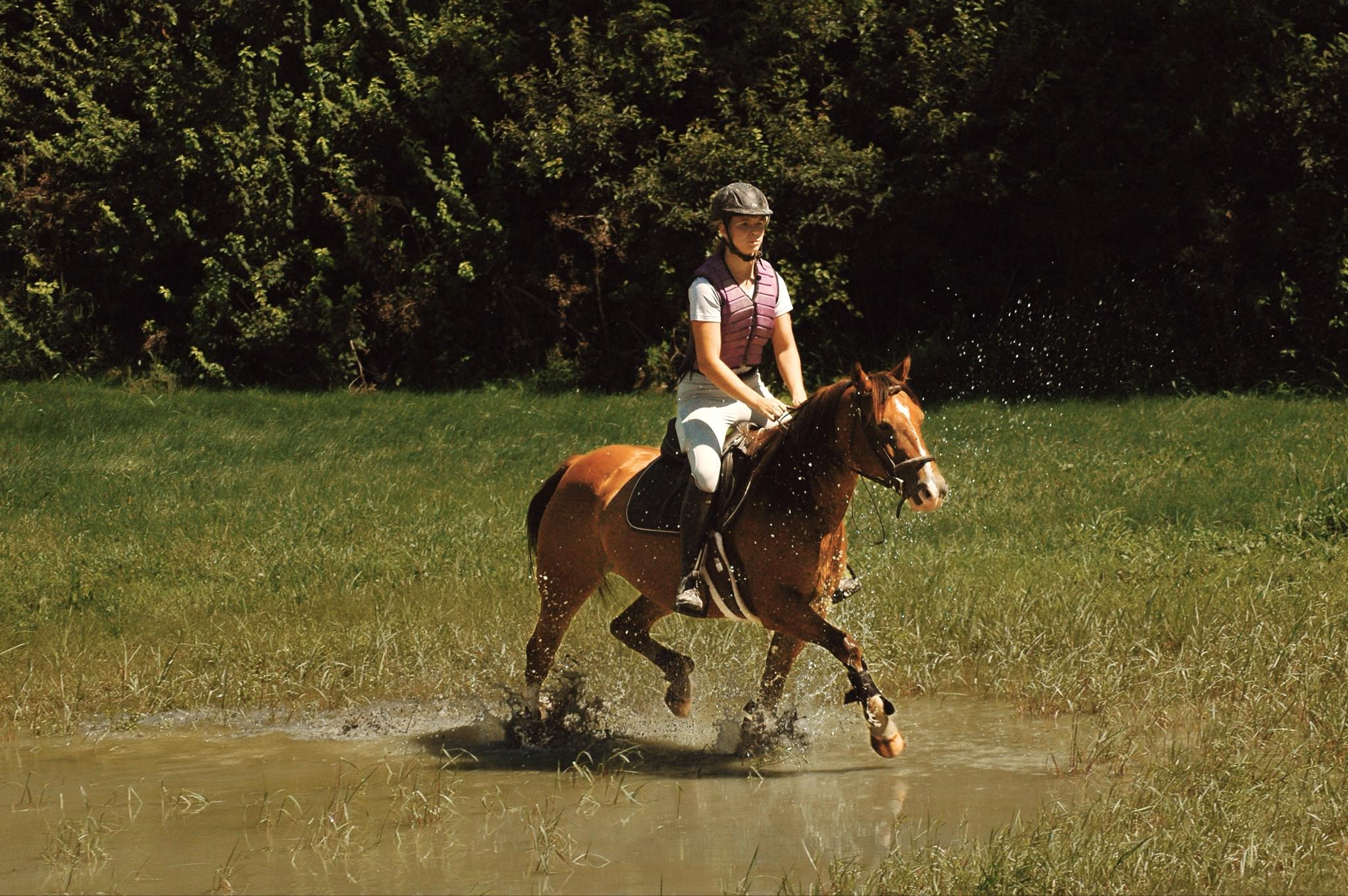
Forward is one of the most misunderstood feelings in horsemanship. People chase it, push for it, or try to create it with bigger cues and more leg… yet true forward has almost nothing to do with speed and everything to do with the horse’s mind.
On the outside, forward and rushing can look almost identical. Both involve movement, both involve energy, and both involve the horse going somewhere. But the feel could not be more different.
A forward horse is with you. A rushed horse is leaving you – even when their feet are technically moving forward. Because rushing has very little to do with speed… and almost everything to do with emotion.
Forward doesn’t start with the feet. It starts with a horse who is still thinking, still present, still connected enough to ask the question, “What now?” It’s a mental “yes,” even if it’s a small and uncertain one.
The body tells you when the mind is still with you. The back frees up, even a little. The stride finds a rhythm. The horse begins to carry themselves with a touch more balance instead of leaning on you for it. You feel their energy step into the next stride with intention – not tension.
Forward is quiet desire. Forward is participation. Forward is the horse saying, “I’m here with you.”
Sometimes it’s just the first soft step under saddle – not perfect, not fancy – just taken from a place of thinking instead of fleeing.
Rushing feels completely different. A rushed horse isn’t trying to misbehave. They’re overwhelmed. And once a horse tips into overwhelm, the thinking brain shuts off and the surviving brain takes over. You feel that shift before the feet even speed up.
Rushing shows up as tightness through the back, hurried steps without rhythm, a braced neck, a scattered mind, or a horse who feels like they’re emotionally slipping away from you. Some horses rush outward – fleeing forward. Others rush inward – holding tension like a coiled spring until they can’t anymore.
Either way, the moment stops being about understanding and turns into escape. And no horse learns in that state. They endure it.
That’s the difference: Forward feels like the horse is with you. Rushing feels like the horse is leaving the moment.
This is why riders often have to do something counterintuitive: to create forward, you usually have to slow down first. Slow brings the brain back online. Slow restores clarity. Clarity builds confidence. Confidence builds willingness. And willingness is where forward begins.
When a horse hits that overwhelmed place, the answer isn’t to drive them harder. That only pushes them deeper into the survival brain. The goal isn’t to make them “get over it.” The goal is to help them return to thinking.
Sometimes that looks like a small circle, a relaxed step or two, a deep breath, a moment of stillness, or a simple job the horse understands. You’re not shutting them down. You’re reopening the doorway to the learning brain. Forward doesn’t come from pushing past the rush – it comes from bringing the horse back to you.
Forward matters physically, too. When a horse moves forward with balance, the whole body supports the movement. The hindquarters step under, the core activates, the back lifts, the shoulders free up, and the stride becomes more organized. This is the kind of movement that builds a strong, sound horse.
Rushing does the opposite. It overloads joints, creates bracing, disrupts coordination, stresses tendons and ligaments, and teaches the body to move in survival patterns instead of healthy ones. Young horses are especially vulnerable; moderate, well-controlled movement helps developing structures grow stronger, while chaotic, stress-based movement increases the risk of strain.
So when a horse rushes, it is never simply because they went from walk to trot. A horse rushes because they went from thinking to fleeing. That’s always a mental red flag.
The moment you feel the horse mentally leave the moment – that’s when you slow down, breathe, simplify, and rebuild clarity. Forward comes back when the horse comes back.
And here’s the final piece: every horse is different. Some need more time. Some need more support. Some need a moment of structure before they can find softness. Some need their rider to slow down enough to notice the subtle shift that happens just before the rush begins.
What matters isn’t having the perfect technique. What matters is knowing what’s happening in the horse’s mind and riding with intention, not reaction.
Forward is not a gait. Forward is a mindset. Forward is a relationship.
When you teach a horse to think forward – not flee forward – you build softness, confidence, and longevity into every stride. That’s where real horsemanship begins.
– Southside Performance Horses
Photography By: Lucy Broadwater