
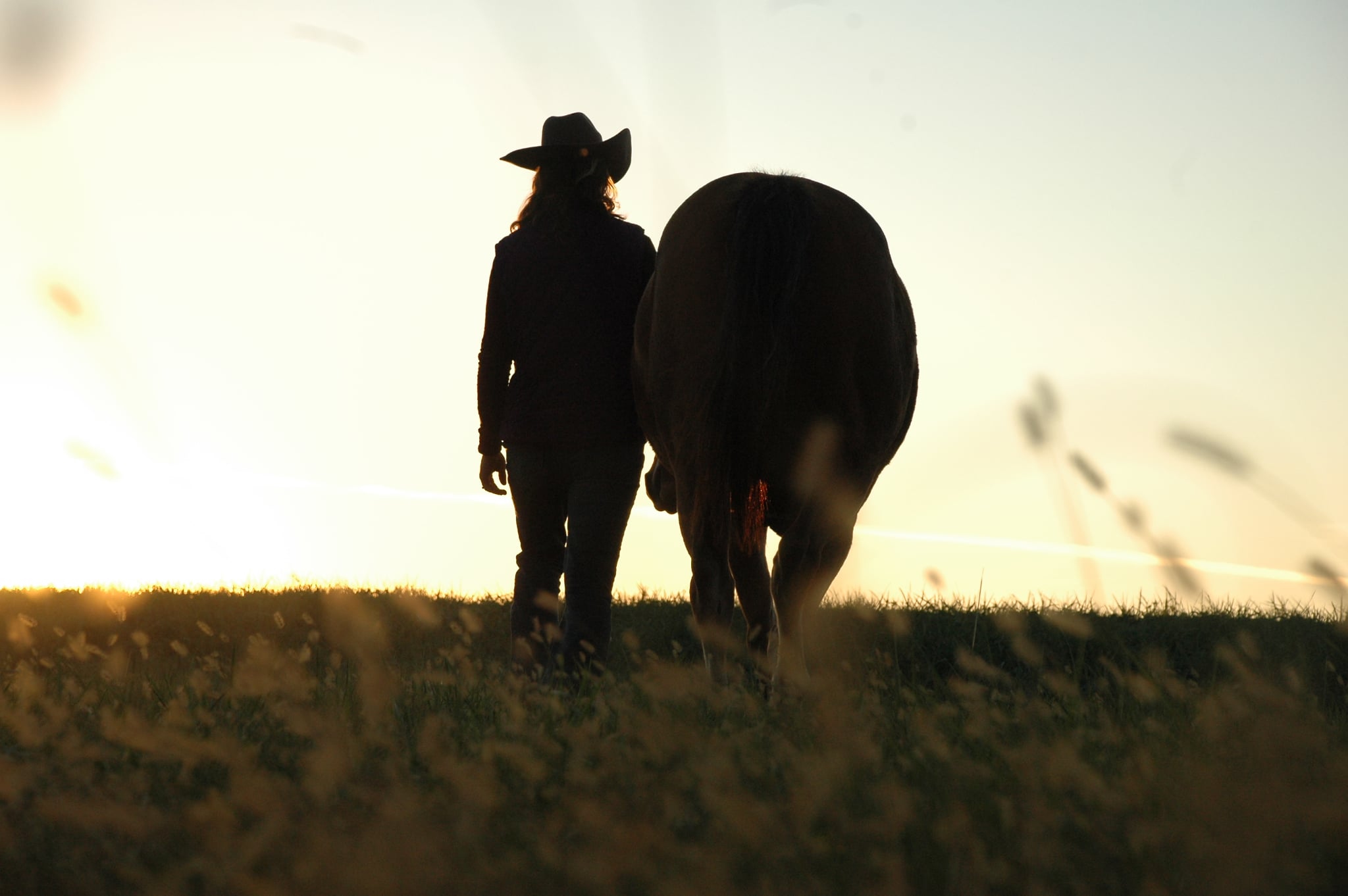
Horses may not use words, but they are always communicating. Long before a halter goes on or a foot steps into the arena, a horse is already telling you exactly how they feel - with their posture, their breathing, their softness, their stillness, their tension, and the intention behind every step. Reading a horse’s energy isn’t mystical or exaggerated; it’s simply learning to notice the emotional state a horse brings into a moment, and how your own state shapes theirs.
It’s the very first thing we pay attention to when a horse steps off the trailer. Before we ever put them to work, we’re already listening. Their energy is information - and when you learn to read it, training becomes clearer, safer, and far more productive.
When some trainers say “energy,” they’re not talking about anything supernatural. They’re referring to the combination of a horse’s emotional state, mental availability, physical readiness, and intention. You see it in the way they breathe. You feel it in how they carry themselves. You notice it in their eyes, their hesitation, their curiosity, or their avoidance.
It’s like when a person walks into the room - you can tell instantly whether they’re relaxed, stressed, distracted, shut down, or interested. Horses communicate the exact same way, except unlike people, they don’t hide it.
And those very first moments with a horse can offer surprising clarity. When a new horse arrives, we’re already reading what they bring with them. Do they step off the trailer boldly or cautiously? Are their eyes soft or scanning? Do they take a breath and look for connection, or do they brace and shrink inward? Do their feet move with curiosity or hurry?
None of it is “good” or “bad.” It simply tells us where to begin.
And here’s a piece that often gets missed in the rush to “get to work”: your energy matters just as much as theirs - sometimes even more. Horses read us far more accurately than we read them. If you walk in frazzled, hurried, irritated, or hesitant, your horse knows immediately. Even a well-trained horse can get tight or confused when the person handling them is scattered. It’s no different than when a human enters a room tense - everyone else adjusts, even when nothing is said aloud.
So when we work horses, we make sure we’re bringing calmness, consistency, and clarity. Not because calm energy is magical… but because horses mirror what they feel.
Some horses bring anxiety with them. With the anxious ones, you feel it right away - sometimes through quick feet and tight muscles, and sometimes through stillness that feels too quiet to be comfort. An anxious horse can look explosive or frozen, but the internal feeling is the same: they’re overwhelmed. And what they need first is not pressure, but room to breathe and someone willing to meet them where they are. The goal isn’t to erase anxiety in one session, but to help them settle just enough to begin thinking again.
Other horses arrive shut down. To someone untrained, they look easy - slow, quiet, obedient. But their eyes go dull, their responses feel heavy, and their energy is withdrawn rather than relaxed. These horses often thrive with good release, soft timing, and clear acknowledgment of the moments they get something right. Even small food rewards, used correctly, can help things “click” - not as bribery, but as a way to say, “I saw that. That mattered.” Their breakthroughs usually come when they realize they’re allowed to participate again, not just comply.
Then there are the bold ones - the horses who greet the world with curiosity and confidence. They’re friendly, bright, and more than willing to take over if you hesitate. They’re not trying to be disrespectful; they’re simply filling a leadership space you didn’t claim. They thrive on clarity and boundaries that don’t crush their confidence. These horses need a leader who stays consistent without getting confrontational - someone who can say, “You’re allowed to be bold, but we’re doing this together.”
We see all of these types at SPH.
A young horse like Onyx walks in curious and observant, always wanting to be part of the conversation. That kind of brain is a gift - but it also means he’ll test boundaries, get a little pushy, or rush ahead when he’s thinking faster than his body can keep up. He needs structure that shapes his confidence without dimming it.
A client horse with a slower, thoughtful energy - the kind that comes from a horse who’s been asked to cope with more than he understood. He needed time to see that he was safe, that no one was going to rush him, and that his voice mattered. Once he realized he didn’t need to brace to protect himself, he began asking questions, then offering tries, then showing curiosity. His growth didn’t come from pressure; it came from space and clarity.
And then there’s Rocky - a horse who thrives on variety. Keep his sessions fresh and purposeful, and his energy becomes bright, engaged, and connected. Repeat the same task too long, and he’ll check out. He’s a perfect example of why training can’t be one-size-fits-all.
You can practice reading energy at home long before you step into a session. You don’t need a degree, and you don’t need specialized training. You just need to pay attention. Ask yourself:
- Are they tight or loose?
- Are they thinking or reacting?
- Are they coming toward me or leaving mentally?
- Do their steps feel quick, sticky, hesitant, or unsure?
If another person approached you with that level of tension, confidence, hesitation, or pushiness - what would that communicate?
Reading energy is simply awareness. The more you practice, the more you see.
And when you understand the energy a horse brings into the moment, you stop fighting them and start working with them. You can adjust before things escalate, reward the right moment instead of missing it, and keep training fair and clear. It doesn’t make you perfect, and it doesn’t erase miscommunication - that’s part of learning for both sides. But awareness turns mistakes into opportunities instead of setbacks.
This isn’t about being a “horse whisperer.” It’s about being present.
Reading your horse’s energy is one of the most valuable skills you can develop. It builds partnership, improves timing, prevents miscommunication, and turns training into a conversation instead of a demand. Every horse brings their own energy into the arena - and when you learn to see it, the work becomes clearer, calmer, and more rewarding for both of you.
- Southside Performance Horses
Photography By: Lucy Broadwater